
Lease Management vs. Lease Accounting: Understanding the Key Differences

In the complex world of lease-related processes, it’s crucial for finance and accounting professionals to distinguish between lease management and lease accounting systems. These two distinct solutions serve unique purposes and cater to different aspects of the lease lifecycle. In this article, we will delve into the key differences between lease management and lease accounting, shedding light on their respective roles and importance.
Lease Accounting: Focusing on the Financials
A lease accounting system is a critical tool for organizations looking to comply with accounting standards like ASC 842, IFRS 16, and GASB 87. Its primary purpose is to handle the financial intricacies associated with leases, both from the perspective of lessees and lessors. Here’s what lease accounting software typically encompasses:
- Calculation and Recording: Lease accounting systems excel at calculating and recording lease-related financial information. This includes lease payments, lease liability, and right-of-use asset values.
- Compliance Reporting: They offer reporting features that help organizations generate financial statements and other reports required for compliance purposes.
Lease Management: Streamlining Operations
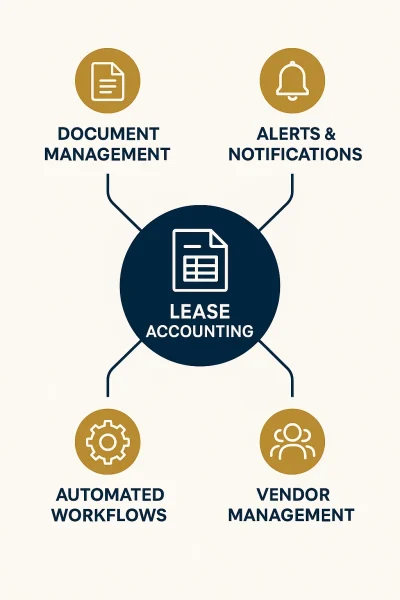
Conversely, a lease management system, often referred to as lease administration, focuses on the operational management of leased assets, either from the lessee or lessor perspective. This type of system addresses various operational challenges that lessors encounter throughout the lease lifecycle. Key features of lease management systems include:
- Document Management: Efficiently managing lease documents, contracts, and related paperwork.
- Automated Workflows: Streamlining processes through automated workflows to ensure smooth lease management.
- Alerts and Notifications: Providing alerts and notifications to stay on top of critical dates, such as lease renewals and inspections.
- Vendor Management: Facilitating vendor interactions and negotiations related to lease agreements.
Lease Management Risks if not Administered Correctly
Failure to administer lease management effectively can lead to a range of risks and challenges, including:
- Financial Penalties: Breaching lease terms can result in significant fines and penalties, straining financial resources.
- Loss of Property: Non-compliance with lease terms can grant lessors the right to evict lessees, leading to potential displacement and associated costs.
- Legal Action: Lease breaches may lead to costly legal disputes, tarnishing the reputation of involved parties.
- Increased Costs: Mismanagement can result in higher long-term costs, including maintenance, utilities, and other expenses.
- Unfavorable Renewal Terms: Poor management may discourage lessors from offering favorable renewal terms, leading to higher rents and less favorable conditions.
- Operational Disruptions: Unexpected relocations due to mismanaged lease terms can disrupt business operations and customer relationships.
- Loss of Security Deposit: Failure to manage terms correctly can lead to the forfeiture of the security deposit.
- Unplanned Extensions: Without proper management, accidental lease extensions can occur, incurring additional costs.
- Missed Opportunities: Lease terms often include options like the right of first refusal or renewal options at favorable rates, which can be missed if not managed properly.
- Unexpected Liabilities: Some leases contain clauses related to liabilities in case of damages or other events, which can result in unexpected financial burdens if not managed.
Incorporating Both Worlds with Black Owl
For organizations seeking a comprehensive solution that bridges the gap between lease management and accounting, Black Owl stands out. This innovative system combines the best of both worlds, allowing for efficient lease administration and robust accounting functionalities.
In conclusion, understanding the distinction between lease management and lease accounting is crucial for finance and accounting professionals. While both are essential for lease-related operations, they serve different purposes and cater to distinct aspects of the leasing process. Careful consideration of these systems’ functionalities can help organizations make informed decisions to meet their specific needs.
Frequently Asked Questions
What is the difference between lease management and lease accounting systems?
Lease management systems focus on the operational aspects of leased assets, such as document management, vendor interactions, and lease renewal alerts. In contrast, lease accounting systems manage the financial side, handling calculations, compliance reporting, and lease liabilities, ensuring organizations comply with accounting standards like ASC 842, IFRS 16, and GASB 87.
Why is it important to separate lease management and lease accounting?
Separating the two systems ensures that organizations can address both the operational and financial complexities of leasing. Lease management handles the day-to-day operations and logistics of leases, while lease accounting focuses on financial records and regulatory compliance, helping organizations avoid penalties and ensure accurate financial reporting.
What are the risks of mismanaging lease agreements?
Mismanagement of lease agreements can result in various risks, including financial penalties, legal action, increased long-term costs, unfavorable renewal terms, and the loss of a security deposit. Proper lease management helps avoid these issues, ensuring smoother operations and compliance with lease terms.
How can Black Owl help bridge the gap between lease management and lease accounting?
Black Owl offers a comprehensive solution that integrates both lease management and lease accounting functionalities. This system allows organizations to streamline their lease operations while maintaining accurate financial records, ensuring compliance with accounting standards, and optimizing overall lease performance.

Greg Kautz
Greg Kautz, CPA, CMA is a seasoned management consultant and professional accountant with over 40 years of experience in the consulting and energy sectors. At Black Owl Systems, Greg brings deep expertise in ERP systems, corporate finance, strategic planning, and technology integration.
